

When I was quitting my first PhD, I needed a creative outlet. The result was john-chan, my own bootleg Adult Swim. john-chan was my attempt at creating my own version of Adult Swim from Cartoon Network. I always liked the idea of Adult Swim. It presented a sort of counter culture new art style that captured a lot of Internet culture and translated it into late night stoner tv. It had original programming like Sealab 2021 and syndicated shows like King of the Hill.
When Adult Swim started they really leaned into the Adult Swim metaphor literally. And would show pictures of adults swimming. For those that don’t know, “Adult Swim” is an American phrase that traditionally refers to the 15 minutes an hour that adults will be allowed to swim at the local neighborhood pool during the summer. So it suggests the television about to be played will not be suitable for children.
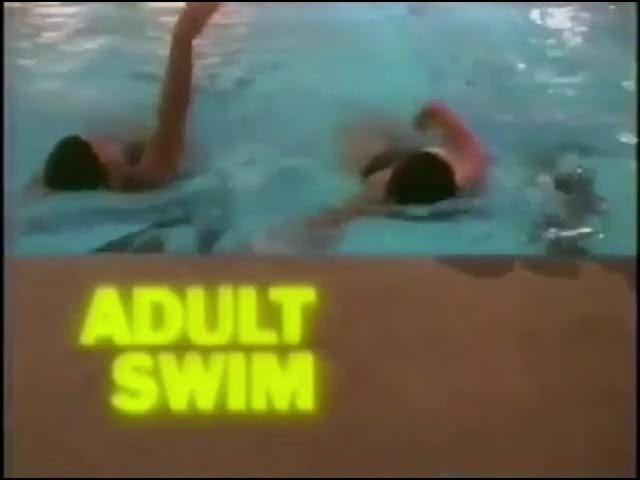
Adult Swim programming has a certain flow to it. Typically it would start with episodes of King of the Hill and Mission Hill. Two off beat animated shows one about living in Texas and the other about being a hipster of the mission hill district in Boston. They each have their own unique charm but they also are not shocking. This would transition to shows like Aqua Teen Hunger Force or Sealab 2021. At some point in the night you would find yourself watching something really out there like unedited footage of a bear. I wanted to recapture this vibe with john-chan.
Nominally, john-chan was simply youtube playlists that I curated two to three times a week and then would post on social media trying to get people to watch. I had different shows like DBZ abridged, some cartoons I might find, usually a movie, and I would end with an episode of Bob Ross and then an episode of Mystery Science Theater 3000. These shows all tried to capture a feeling or an essence of television from the late 90s to early 00s.
DBZ Abridged is a fan made show where they recut episodes of Dragon Ball Z to be satirical takes on the show. It is rather self referential but manages to both tell the story of the original show while also adding a layer of meta-humour. Bob Ross is an American icon. He had a very long running show on public television that was about teaching people to paint using a wet oils method. His show was also about creating a relaxing vibe and just accepting whatever comes your way. Mystery Science Theater 3000 was a show about a guy who was kidnapped by a mad scientist, shot into space, and forced to watch bad movies to try and control his mind. You would then watch this guy and his robot friends make fun of the bad movies they were watching. It was a total 90s stoner vibe. So ultimately this all came together to form john-chan.
Click the button below to see what I am talking about. If there is more than one commercial block in a row it’s because a video has been hidden. I did this a long time ago (about 10 years!) and videos don’t last forever on youtube.
An important component of john-chan would be punctuated with commercials.
The commercials weren't just there to make it feel like a real TV channel. I chose commercials specifically from the mid 80s through the late 90s. I think that era was the golden age of TV ads. The spots from that period were genuine art. Major directors like David Lynch worked on them, and you can watch a compilation of his below. Other directors, like McG who went on to do Charlie's Angels, or Spike Jonze, actually launched their careers making commercials. I have a deep love for television commercials.
From a certain point of view, commercials traditionally offer a utopian or ideal scenario that will exist if only the buyer purchases the advertised product. In the 90s these were brought to a new level with extreme surrealism entering commercials like children transforming into metallic people from drinking Caprisun. They are culturally aware. If you compare commercial for similar products across cultures, you will find that the Japanese idealize life in ways much different than americans. For example, compare these two commercials about coke from 1995. The first is a japanese commercial promises an extreme and fun lifestyle. The second is an American commercial directed by J.J. Abrams (Star Wars: Rise of Skywalker, sigh) starring Tony Hawk that also promises an extreme and fun lifestyle.


Commercials also capture an interesting snap shot about the cultural meta discussion about people and ideas. I will give two examples.
In the 1990s Nike was on top. They had Michael Jordan selling shoes for basketball and they wanted more of their already large slice of American football show market as well. So Nike hired star Dennis Hopper as an American football referee who has been kicked out of the NFL and now tells conspiracy theories about the NFL. Dennis Hopper was a very famous actor and very famous for being Hollywood elite while also art house (he won a Palme d’Or for Easy Rider along with Peter Fonda). But by the 90s he had been type cast as a crazy deranged person and was starring in movies like the 1993 live action Super Mario Bros. where he played King Koopa or as a crazy terrorist who put a bomb on a bus in the movie Speed (1992). So Nike capitalised on this by having him in these commercials as a crazy homeless referee telling conspiracy theories about players that are currently sponsored by Nike. And his performances are just as good as any of his academy award nominated ones.
The second set of commercials that are really important in my opinion are the AT&T “You Will” campaign. They star Tom Selleck, who has a unique voice, very strong mustache, and was very famous in the 1980s as Magnum PI, a private detective who lived on Hawaii and wore Hawaiian shirts, drove fast cars, and met beautiful women. But in the 1990s Tom Selleck was still “Hollywood Elite” (at least far more than I ever will be) but his biggest role, which I enjoyed, was a nine episode arc as Monica’s (27) much older boyfriend Dr. Richard Burke (49) on Friends. But Selleck has a kind and introspective voice and so his narration is rather comforting in the AT&T “You Will” campaign.
The “You Will” campaign is all about the future that is about to come because of the internet. It tells you about how you can buy movie tickets online, make video calls home, work remotely from a beach in Thailand, or even take an online class, all with technology that AT&T will develop in the near future. And it is wonderfully prescient, seeing all the changes about to come, while presenting technology that looks nothing like the ultimate outcome. And mostly none of the technology was actually developed by AT&T either. There is some historical precedent to AT&T seeing itself as a a researcher leader. AT&T was relying on the historic knowledge of Bell Labs, an enormously successful research lab that was organized by the original AT&T. Bell Labs and its researchers came up with things like the Unix operating system, information theory, C/C++, , the charge-coupled device (CCD), the laser, the transistor, the photovoltaic cell, and all sorts of other stuff. Ultimately AT&T was split apart by the US government for being a monopoly. So the current AT&T to this commercial was actually a different company from the original. Bell Labs became Lucent Labs in 1996, but this kind of idea that AT&T was innovative was sort of dead at the time so they were trying to revive that as well with these commercials. And the commercials really paint a picture of a world that you want to live in. Check it out.
One thing that set Adult Swim apart from any other late night television was it had creative and interesting station identification video spots. These were originally like the swim video above, but they evolved into random pictures of Tokyo, white text on black background, and ultimately the creation of their own content like unedited footage of a bear.
In order to capture a similar vibe, I made 21 second long station identification videos from random video I shot from various places I visited. They would also present some static screen and then at some point “john-chan” would come onscreen and then cut to black. Back to commercials or your regularly scheduled program. You can watch one of these spots that I had shot on top of Mt. Fuji in Japan. But most of them I shot around town in Potsdam or going to Berlin on the train. I wanted each video to evoke a single emotion. Like shock or awe or melancholy. I wanted these to grab the viewer and remind them that they were watching a curated thing.
I also planned to make my own content that would be part of john-chan. John-chan studios produced only one short animated film. It’s a story about a bird going through an ordeal and some how recovering and moving on with their life. This short was made and paralleled when I quit my PhD which I have written about previously.
When I quit my PhD

I woke up, somewhat nervous. It was a warm, April Saturday. Typically my PhD adviser had not invited me for meeting outside of work. Much less on a Saturday. I decided to wear a grey button down shirt, black jeans, and suspenders. I had recently had some idea that I should start wearing suspenders, that suspenders would some how establish my hipster ide…
It is kind of wild I made this movie at this moment in my life. In the story above, it describes both how I was dealing with serious depression and despondence while also my job was falling apart. Each of these problems is represented in the film below by an egg that the bird lays that is as big as the bird itself. By the end of this ordeal, The bird is left laying face down on the table after laying two enormous eggs. But the bird picks himself up and keeps going on with life. Surviving and thriving. The art reflects the artist that is true. Please allow me to deconstruct myself in front of you. you can watch that short here.
I think of this as creative outputs. And if it made myself happy then that is enough. Maybe someone else would find it exciting. Perhaps john-chan will come back if rainy-city.com gets a television station. It was definitely a diversion worth pursuing at the time.
In conclusion, I think that there is an art to a lot of things we take for granted. Commercials, media curation, even just creating these little spots to tell you which station you are currently tuned into. Art is a slice of culture and culture is one of the things that defines each of us. It is our experiences that we share. In the current AI land where everything can be had for almost free, curation becomes even more important. Projects like rainy-city.com rely on AI created art. Streets of rainy-city.com used AI created videos to create sprite animations (this deserves its own post I think). We can always prompt slop out of AI tools but curation of such art, picking what belongs, what doesn’t, trying to generate a vibe, this is art as much as anything else. In the same way that john-chan gave me the ability to create my own version of Adult Swim, these tools give us the option to create anything we can imagine inside of our computers, it’s only up to us to take us there.
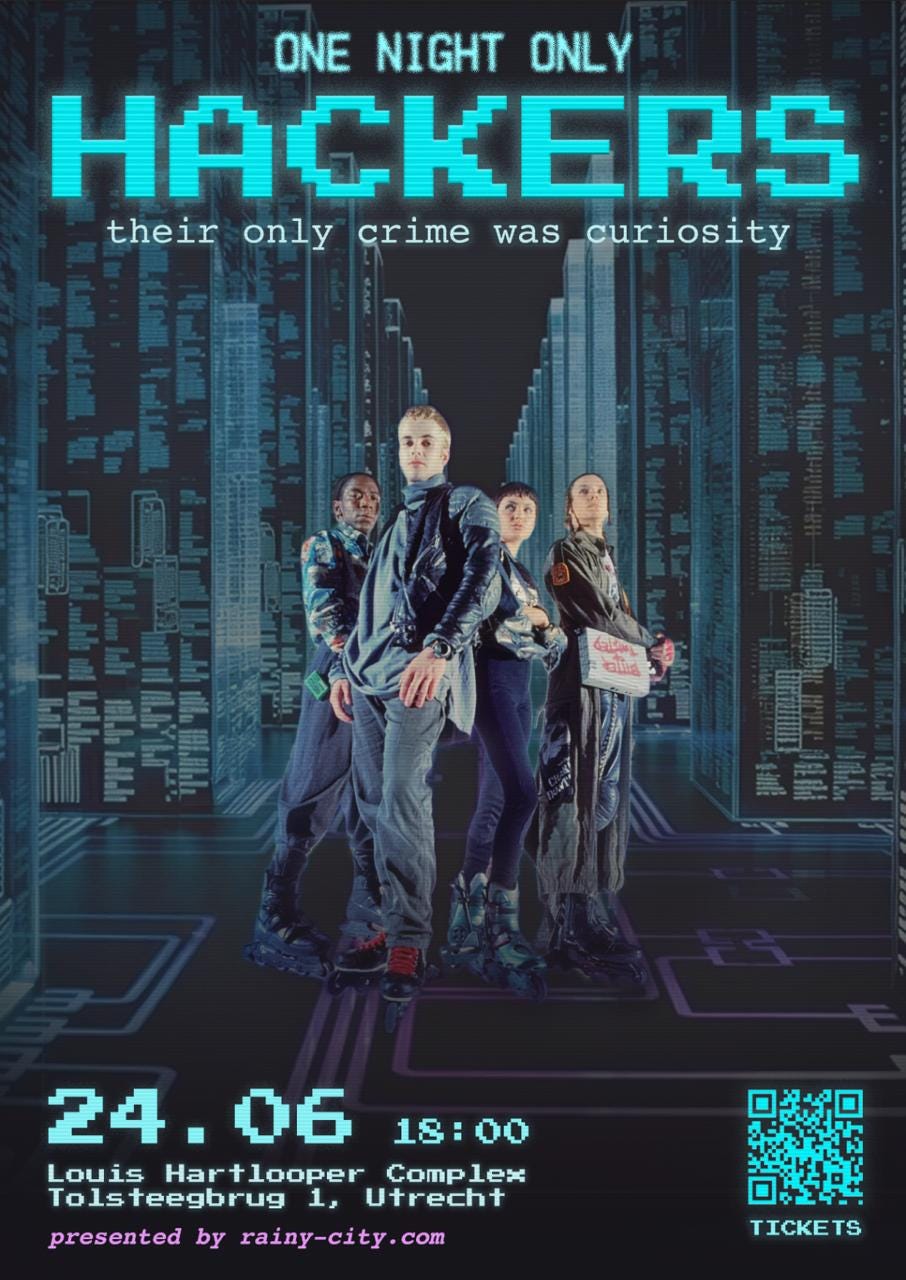
I think the spiritual successor to all of this is the currently (as of this writing) planned showing of the movie Hackers (1995). If you are in The Netherlands, stop by! If its after June 24, then you missed out.
John Aiken has a PhD in physics, is editor-in-chief of low impact fruit, mayor of rainy-city.com, a Recurser, and passionate about saving the whales.